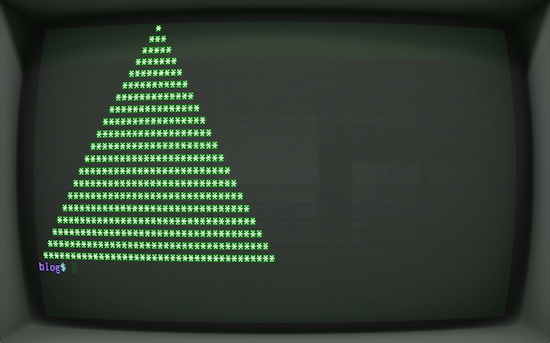
It’s Christmas time, nerds rejoice! Welcome this festive season with a bit of programming acumen to festoon your old CRT monitor with some yuletide cheer.
Continue reading
O Christmas Tree
Reply
It’s Christmas time, nerds rejoice! Welcome this festive season with a bit of programming acumen to festoon your old CRT monitor with some yuletide cheer.
Continue reading
No, a tick separator isn’t something you use on your dog during the summer. Instead, you find it in the upcoming C23 standard. A tick separator helps visually split up a long number, making it easier to read your code.
Continue reading
One thing I take for granted is which C standard I’m using. The differences between the versions are subtle, and the compiler chooses its standard by default. But this choice can be altered for compatibility or historical reasons.
Continue reading
The task is truly complex: Navigating a knight around a chessboard, visiting each square but never the same square twice. It took me a while to code, and I don’t think my solution is particularly elegant, but it works.
Continue reading
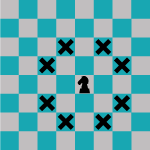
I first read about the Knight’s Tour when I was a kid. My mom bought the Time Life series of books on computers. It it, the Knight’s Tour program is presented, which fascinated me. After all this time, I finally set out to code the tour myself.
Continue reading
The next step in hopping a knight around a chessboard is determining which squares from its current position represent valid moves. Code must be combined from last week’s lesson (setting the knight on the chessboard at a random spot) with the movement code presented a few lessons back.
Continue reading
Continuing from last week’s Lesson, the task is now to combine the chessboard output from this month’s Exercise solution with the knight’s random location. This step is the next one leading to the result, which is to plot how a knight moves on a chessboard.
Continue reading
A chessboard is a gird, traditionally eight-by-eight squares for 64 positions. This game matrix can be implemented in code in a variety of ways, with a two-dimensional array being the most obvious. But this option isn’t what I chose when programming how a knight moves (from last week’s Lesson).
Continue reading
Computers and chess go together like Mr. Spock and Star Trek. The character of Spock is pure genius, a crazy addition to the mix that provided depth and wonder to the TV show and later movies. In chess, it’s the knight that provides the crazy addition, making the game of chess more than an advanced variation on checkers.
Continue reading
I don’t believe I’ll ever absorb all the wondrous potential of Linux/Unix. Case in point is the /dev/random file. It’s exactly what the name implies: random stuff. And you can use this nifty file in your C programs to generate random values.
Continue reading